Plastics and Polymer Sector
Used as a filler at 20-70% in PVC, polypropylene (PP) and polyethylene (PE) formulations, it adds rigidity and durability.
trending_upMost Common Filler


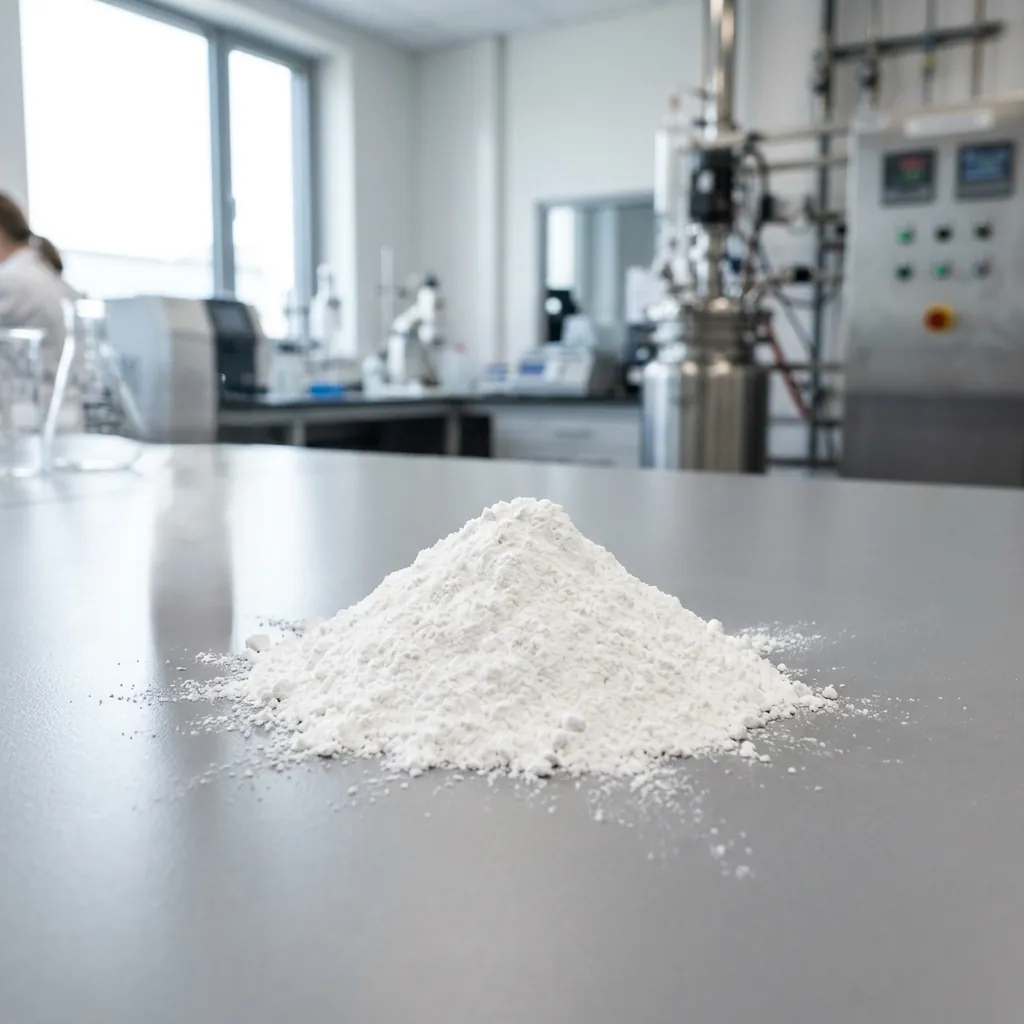
A rigidity and stability enhancer in processes ranging from plastics to paper and paint. Sustainable GCC formulations extending from limestone basins to the marvel of industrial micronization.
Micronized d50
1.5-45 Micrometers
Purity Value
Above 95%
ISO Brightness
≥ 90%
Surface Area
5-24 m²/g
Natural calcium carbonate (CaCO₃): It is the main mineral component of rocks such as limestone, marble and chalk. In industry it is referred to as GCC (Ground Calcium Carbonate) and, unlike synthetic productions, it is obtained entirely from natural quarries by mechanical grinding.
It is formed into very fine and flawless particles in ball and Raymond mills, in dry or agitated wet grinding (d50: between 1.5 - 45 micrometers). Thanks to the stearic acid bath applied in coated product models, the product gains a much more durable polymer and hydrophobic matrix capability.
With its low production costs, it is the indisputable volume filler of global plastic, polycarbon, PVC cable and industrial paper formulations.
PCC VS GCC COMPARISON
The values in the table provide the reference ranges of our standard quality assurance in the inorganic products market.
| Parameter | Observed Value / Type | Production Standard Essence |
|---|---|---|
| Production Method | Mechanical grinding (GCC) vs Chemical precipitation (PCC) | Physical reduction |
| Particle Shape | Irregular, angular (GCC) | From natural calcite |
| Average d50 | 2 - 10 µm (GCC) | Micronized market values |
| Specific Surface Area | 5 - 24 m²/g (GCC) | Wide contact surface |
| Cost | Low / Economical (GCC) | High savings compared to PCC |
| Main Component | Calcium Carbonate (CaCO₃) | Limestone and marble |
The most popular sectors that provide flexibility, colorability, opacity and physical stabilization while reducing operating costs.
Used as a filler at 20-70% in PVC, polypropylene (PP) and polyethylene (PE) formulations, it adds rigidity and durability.
trending_upMost Common FillerServing as a 10-20% by-weight filler and coating pigment in printing and writing papers, it increases the brightness and opacity of the paper.
trending_upAlkaline TechnologyUsed as an extender in paint formulations thanks to its low oil absorption capacity and binder savings.
trending_upBinder OptimizationIt is the fundamental industrial raw material as a fine aggregate in ready-mixed concrete, as a filler in asphalt mixes and in clinker production.
trending_upCore Load-Bearing FillerIt plays a role in the neutralization of acidic soil, as calcium support for bone development in animal feed, and as an anti-caking agent.
trending_upHigh BioavailabilityThe quality declarations and values most frequently heard by our industry partners regarding our calcium products offered for sale.
Our CaCO₃ source has a brightness above 90% in ISO brightness values, and its CaCO₃ content for industry is above 95%.
Precise granulometry between d50=1.5 µm - 45 µm, used in ball mills, air separators and wet grinding.
Depending on the size of the limestone extracted from our quarries, optimized routing is carried out towards GCC, slag or lime kilns.
Optional stearic acid coated production is carried out in order to achieve a superior polymer matrix and hydrophobic behavior.
Production monitoring faithful to TS EN 197-1 (Cement), TS EN 12620 (Concrete Aggregates) and ISO 3262 regulations.
The body of information we have compiled regarding ore micronization processes related to product formulations.
Supply of stearic-coated or pure calcium carbonate for your project with a high brightness index and unique d50 micronization.