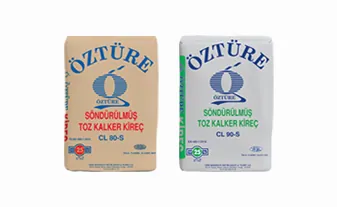
Bag
Small-volume and retail shipping in 25 kg kraft bag packaging.



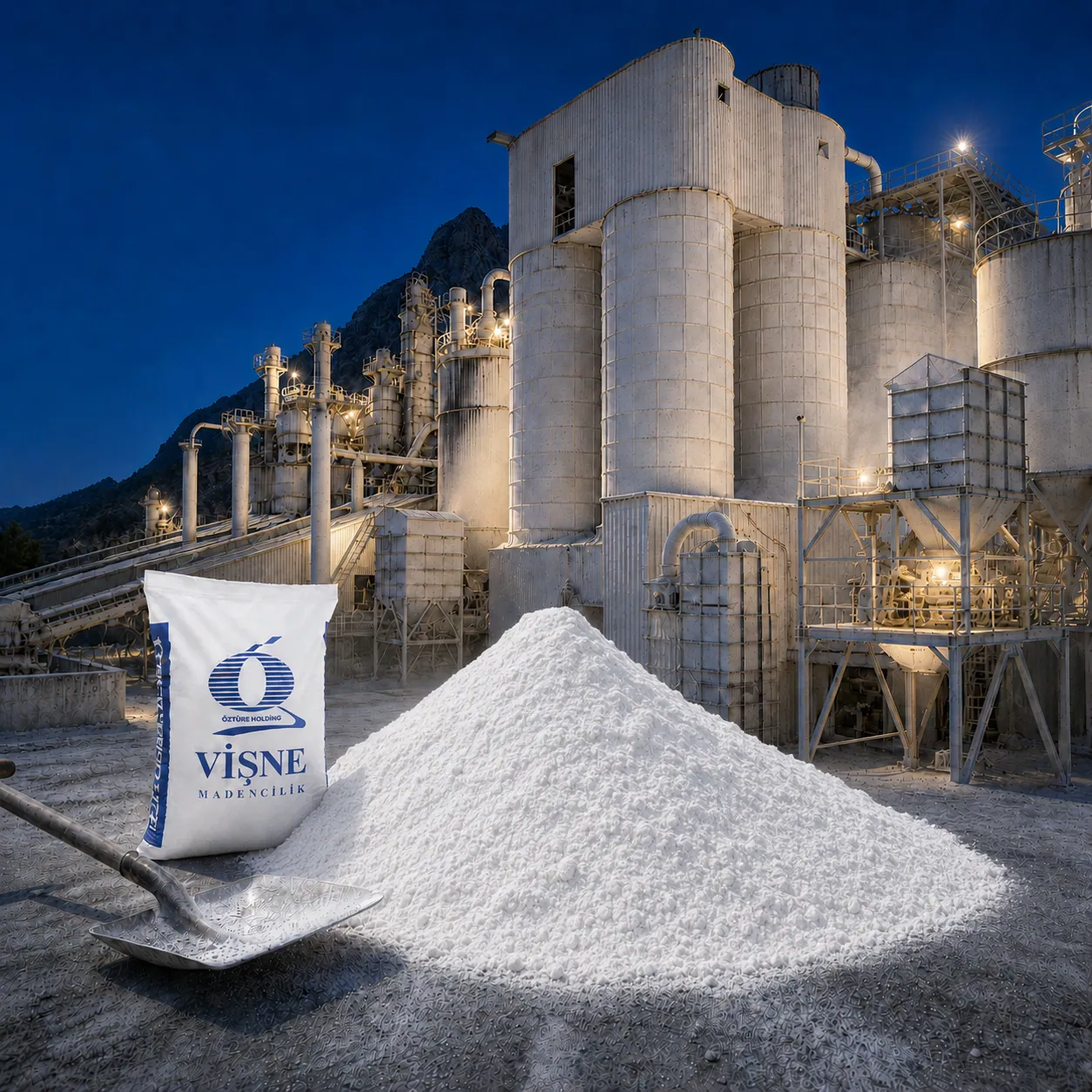
Hydrated lime (calcium hydroxide, Ca(OH)₂) is an inorganic compound in the form of a fine, white powder obtained by the controlled reaction of quicklime with water. It is a critical industrial raw material in dozens of different sectors, most notably water treatment, construction, agriculture and flue gas desulphurisation.
Formula
Ca(OH)₂
pH Value
12.4 – 12.6
CaO + MgO
≥ 93%
Standard
TS EN 459-1
Hydrated lime is produced by the exothermic reaction of calcium oxide (quicklime, CaO) with water. A significant amount of heat is released during this reaction, and the product is transformed into a fine, white powder form known as "hydrated lime" or "calcium hydroxide".
In the production process, high-purity limestone (CaCO₃) used as raw material is first converted into quicklime by calcining it at 900-1100 °C in rotary or shaft kilns. Hydration is then carried out by the controlled addition of water in slaking units.
The temperature, water ratio and mixing speed of the slaking process directly determine the particle size, reactivity and purity level of the final product. In industrial facilities, continuous slaking lines are used to obtain a product of homogeneous quality.
Chemical Reaction Equation
CaO + H₂O → Ca(OH)₂ + Heat
~65 kJ/mol of energy is released. High-purity limestone (CaCO₃) is used as the raw material.
The fundamental parameters that determine the industrial value of hydrated lime are defined within the framework of the TS EN 459-1 standard.
| Parameter | Value / Range | Description |
|---|---|---|
| Chemical formula | Ca(OH)₂ | Calcium hydroxide |
| Molecular weight | 74.09 g/mol | — |
| Specific gravity | 2.20 – 2.45 g/cm³ | Particle density |
| Bulk density | 0.30 – 0.60 g/cm³ | Bulk density (in powder form) |
| Water solubility (20 °C) | ~1.5 g/L | Decreases as temperature rises |
| pH value | 12.4 – 12.6 | Strongly alkaline character |
| CaO + MgO content | ≥ 90% (typically >93%) | TS EN 459-1 compliant |
| CO₂ content | ≤ 7% | Low carbonation |
| Fineness (below 90 µm) | ≥ 93% | High specific surface area |
| Colour | White | Indicator of purity |
Our products are shipped in bag, bigbag and bulk tanker (granular and powder) forms.
Small-volume and retail shipping in 25 kg kraft bag packaging.
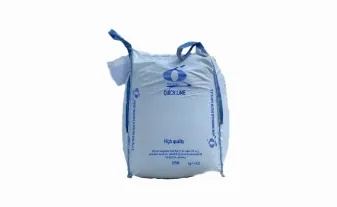
Industrial packaging with 1-tonne capacity providing ease of handling.
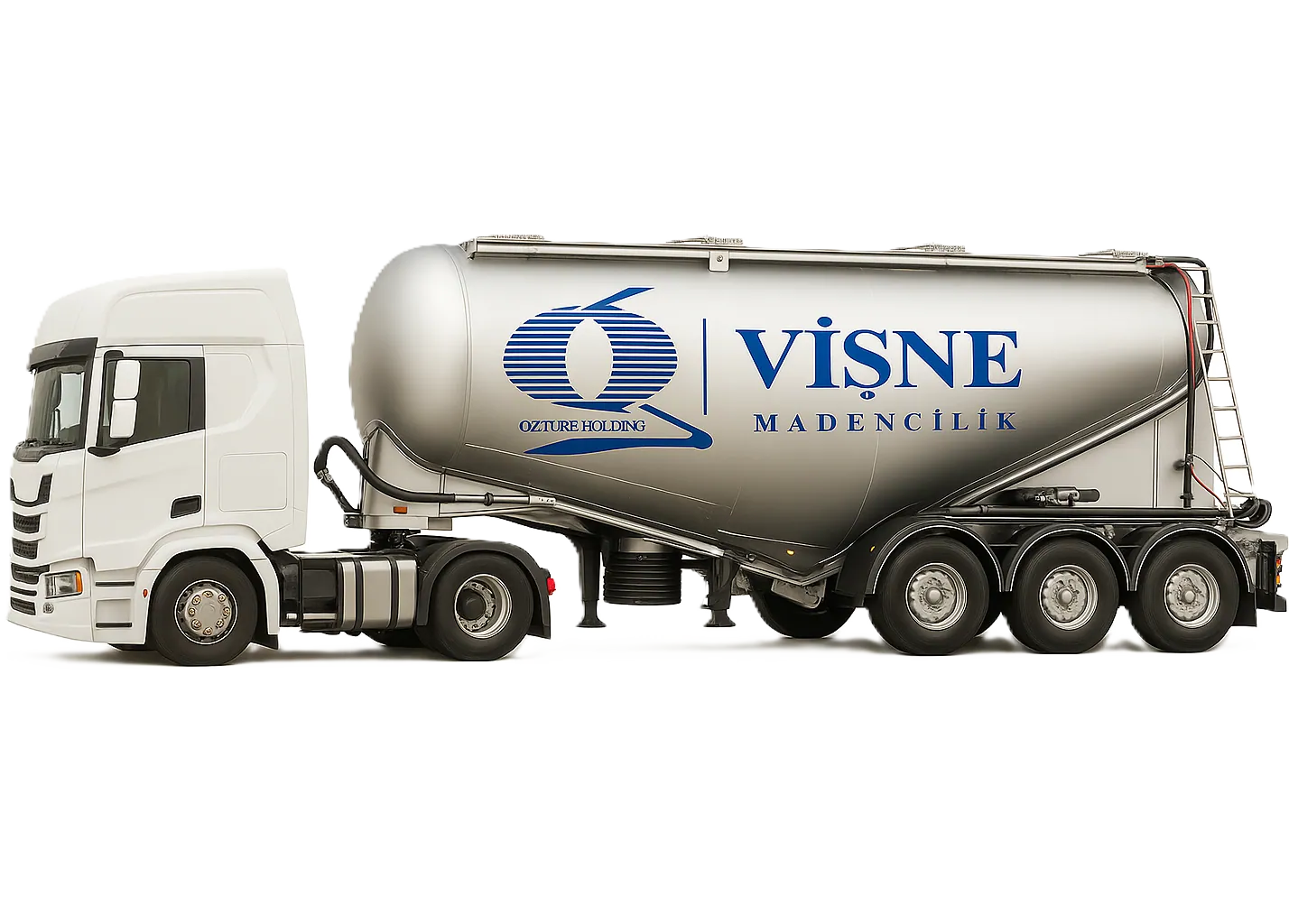
Direct silo-to-silo pressurised transfer for granular and powder products.
Calcium hydroxide is a versatile raw material used across a wide industrial range.
It is a fundamental chemical for pH adjustment, water softening and heavy metal precipitation in drinking water and industrial wastewater treatment plants. By raising the pH to the 9.5-11 range, it enables the precipitation of heavy metals such as zinc, copper, chromium and lead.
trending_uppH 9.5 – 11It is used in lime plaster, lime mortar and whitewash. It acts as a plasticiser in cement mortars and, thanks to its disinfectant properties, is preferred in the production of hygienic whitewash. It serves as a reactive component in the production of autoclaved aerated concrete (AAC).
trending_upAAC ProductionIt is widely used to neutralise acidic soils. By raising the soil pH, it increases the availability of plant nutrients such as phosphorus and molybdenum. It is also used for barn disinfection in livestock farming.
trending_up1 – 5 tonnes/hectareIt is a critical sorbent material for removing acid gases such as SO₂ and HCl in thermal power plants, cement factories and waste incineration facilities. It is used in dry sorbent injection (DSI) and semi-dry methods.
trending_upSO₂ 80–95% efficiencyFood-grade calcium hydroxide (E526) is used in sugar refining, pickle and olive processing, nixtamalization and water pH stabilisation. In the chemical industry, it serves as an intermediate in the production of sodium hydroxide.
trending_upE526 ApprovedThe following technical considerations should be observed for the effective and safe use of hydrated lime.
Calcium hydroxide reacts with CO₂ in the air, carbonates and loses its effectiveness over time. It should be stored in enclosed, dry environments protected from air circulation.
Overdosing may cause the pH to exceed the target. Dosing with automatic pH control systems is recommended.
The fineness of the product directly affects the reaction rate. While products with d₉₀ < 10 µm are preferred in flue gas treatment, coarser-grained products are sufficient for agricultural liming.
Hydrated lime dust is irritating to the skin, eyes and respiratory tract. Dust exposure limits (TLV-TWA: 5 mg/m³) must be observed and appropriate PPE must be used.
Compliance with TS EN 459-1 for building lime, TS EN 12518 for water treatment chemicals and E526 regulations for food-grade uses should be required.
The most frequently asked technical and application-related questions about hydrated lime.
Get in touch with our technical team for your hydrated lime needs. We offer our quality assurance with TS EN 459-1 compliant analysis certificates.