


In short When buying bulk hydrated lime, look at five things: the certificate of analysis values (Ca(OH)₂, CaO + MgO, CO₂, fineness), the relevant standard, the packaging form (25 kg bag, 1-tonne big bag, bulk tanker), the factors that affect price and the information needed for a quote. This guide explains each from the producer's side.
Which questions should you answer first when buying bulk hydrated lime?
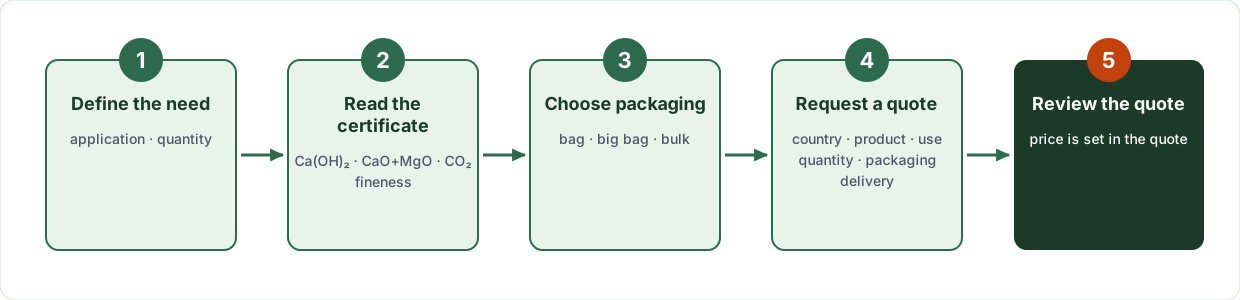
Buying bulk hydrated lime (calcium hydroxide, Ca(OH)₂) is not only a “price per tonne” decision; it is a chain of technical and logistical decisions that determine whether the product will work in your application. Preparing answers to the following questions before you ask for a quote speeds up the process and lowers the risk of buying the wrong product:
- In which application will you use the product (water treatment, flue gas, construction, agriculture, soil improvement)?
- What are your approximate monthly and annual quantities?
- Which packaging form and which delivery point do you prefer?
- Which values and which standard do you want to see on the certificate?
For a description of the product, see the hydrated lime product page.
Which quality criteria should you look at on the certificate of analysis?
The quality of a batch is understood not from a single value but by reading the parameters on the certificate of analysis together. The table below summarises what each parameter says and what a deviation does. For the detailed meaning of the parameters, see a detailed guide to hydrated lime quality parameters.
| Parameter | How it appears on the certificate | What a deviation does |
|---|---|---|
| Ca(OH)₂ content | Percentage of active material | If it is low, more product is needed for the same effect; the dosage calculation changes |
| CaO + MgO | Total oxide equivalent (%) | An indicator of overall purity |
| CO₂ | Degree of carbonation (%) | If it is high, the carbonated, inactive share of the product is larger |
| Fineness (below 90 µm) | Share passing the sieve (%) | If it is low, surface area falls and the reaction slows |
| pH | Alkalinity in water | Shows neutralising strength |
| Bulk density | g/cm³ | Affects silo and transport capacity |
The values published on the Vişne Madencilik product page include CaO + MgO ≥ 90% (typically >93%), CO₂ ≤ 7%, fineness (<90 µm) ≥ 93%, pH 12.4–12.6 and bulk density 0.30–0.60 g/cm³; the Ca(OH)₂ percentage is not published on the page. For exact batch values, rely on the certificate of analysis of each shipment.
Which standard applies to which use?
Standards come into play according to the purpose for which the product will be used:
| Standard | Scope | When it is requested |
|---|---|---|
| TS EN 459-1 / EN 459-1 | Building lime: definitions, specifications and conformity criteria | Construction and building materials applications |
| TS EN 12518 / EN 12518 | Chemicals used for treatment of water intended for human consumption: high-calcium lime | Drinking water treatment |
EN 459-1 divides air limes into the classes CL 90, CL 80 and CL 70 according to their CaO + MgO content and sets separate limits for parameters such as CO₂ and available lime. According to the BSI record, EN 12518 covers high-calcium lime used for the treatment of water intended for human consumption; the record shows the standard as dated 2014 with the status “Current, Under Review”. Which standard applies to which product becomes clear only through the company's written declaration and the certificate of analysis; state the standard specific to your intended use clearly at the quotation stage. Check current editions with the official standards body.
On its product page the company refers to TS EN 459-1 and TS EN 12518. This reference does not mean a particular class or a claim of conformity; ask our sales team in writing which standard and class your product meets.
Should you ask for hydrated lime or quicklime?
Both are made from the same limestone; the difference lies in how they are used. Quicklime (CaO) reacts violently with water and needs slaking equipment at the plant; hydrated lime is a ready-to-use powder that is easier to handle. If your plant has no slaking unit, hydrated lime generally requires less investment; quicklime may be considered at high-volume plants that already have slaking infrastructure. For the full comparison, see quicklime vs hydrated lime compared, and for the product, see the quicklime product page.
How do you choose packaging: bags, big bags or bulk tanker?
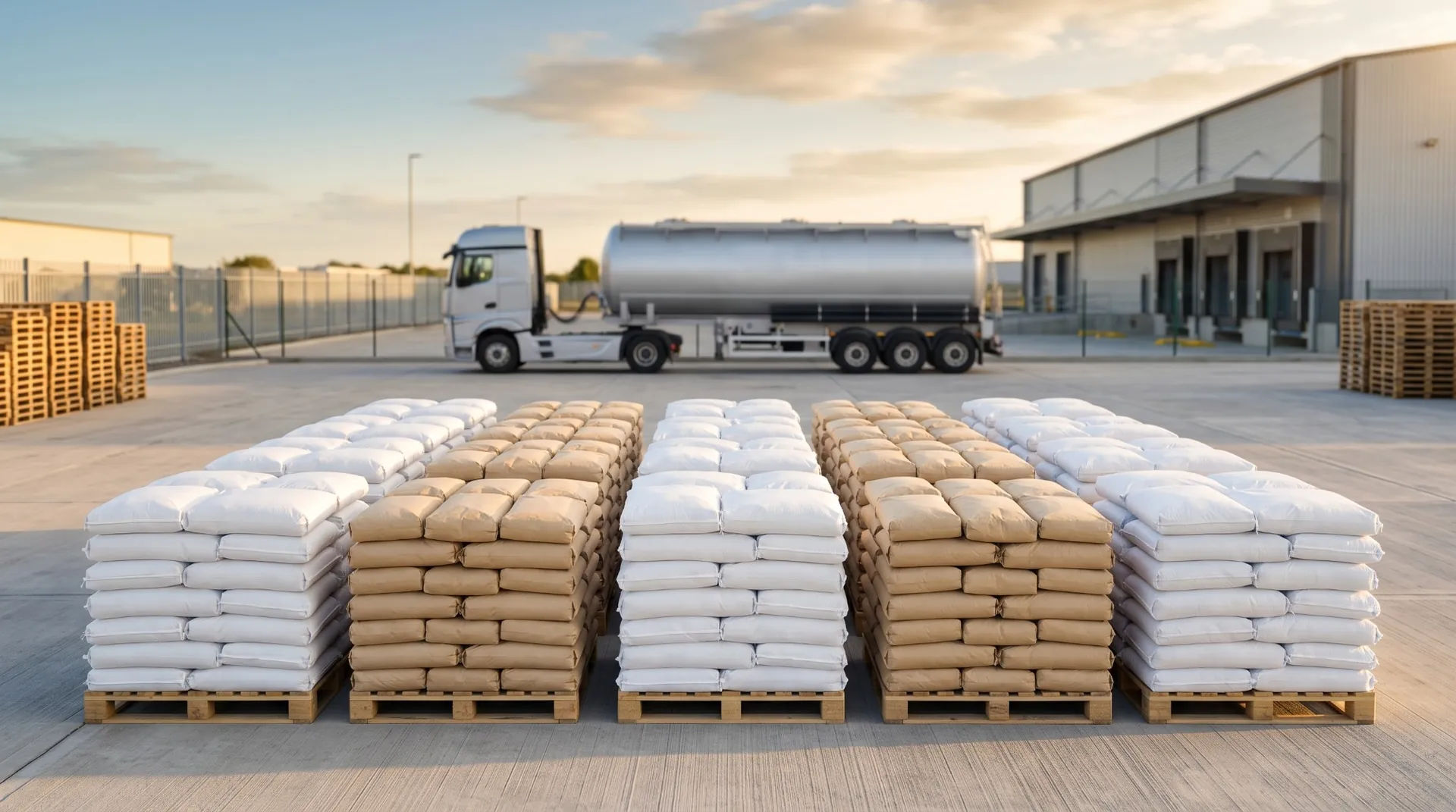
Vişne Madencilik ships hydrated lime in three forms:
| Packaging | Typical volume | Unloading | Storage requirement |
|---|---|---|---|
| 25 kg kraft bag | Small purchases | By hand or from a pallet | Closed, dry store |
| 1-tonne big bag | Medium and large volumes | Forklift or crane | Area protected from moisture and rain |
| Bulk tanker (loose) | Large volumes; granular and powder | Pressurised silo-to-silo transfer | A suitable silo is required |
The choice depends on your monthly consumption, storage space and unloading equipment. Whichever form you choose, the product must be kept closed and dry, because hydrated lime reacts with carbon dioxide in the air and loses its activity. Ask your supplier for the product's safety data sheet (SDS) and set up storage accordingly. For storage and safe unloading principles, see storage and workplace safety principles.
What determines the price?
We do not publish a current price in this article; the price is set at the quotation stage. It is generally shaped by the following factors together:
- Quality: Ca(OH)₂ content, purity and fineness.
- Quantity: Monthly and annual volume and the size of the order.
- Packaging: Bag, big bag or bulk shipment.
- Delivery point: Distance from the plant, mode of transport and export terms.
- Commercial terms: Payment and contract terms.
This list names factors whose weight may differ from one quotation to another; we give no numerical value for any of them.
What information should you share in a quote request?
The following information helps us prepare a quotation quickly and accurately:
- Country and delivery point: Where the product will be delivered.
- Product: Hydrated lime and, if needed, quicklime.
- Application: Where and for what purpose you will use the product.
- Monthly quantity: Approximate consumption (tonnes).
- Packaging: 25 kg bag, 1-tonne big bag or bulk tanker.
- Values and standard sought: The parameters you want to see on the certificate.
If you have prepared this information, you can start the quotation process. Request a quote for bulk hydrated lime.
What should you watch for in export shipments?
Vişne Madencilik states that it exports to more than 30 countries. The documents and customs conditions required for export vary by country and buyer; a commercial invoice, a packing list and a certificate of analysis are common examples. Before ordering, clarify which documents are needed according to the customs and import rules of the destination country. Stating the country and delivery point in your quote request makes it easier to plan an export shipment.
What is the practical difference of working with a producer?
Working directly with a producer means knowing the source of the product and its production chain. Vişne Madencilik operates three integrated plants: Çelemli (Yüreğir, Adana), Narlı (Pazarcık, Kahramanmaraş) and Çukurova / Gündoğan (Ceyhan, Adana); the company states that its combined quicklime capacity exceeds 2,250 tonnes per day. The Lime Slaking Facility and Packaging Unit at Narlı opened on 17 April 2025. For details of the plants, see our factories page. The company also states that it holds 5 ISO management system certificates and a CE certificate; for the scope of the certificates, see the integrated management system page.
Frequently asked questions
Which packaging should I choose for a bulk purchase?
The choice depends on your monthly consumption, storage space and unloading equipment. A 25 kg kraft bag suits small purchases, a 1-tonne big bag suits medium and large volumes, and a bulk tanker suits large-volume buyers with a silo. Whichever you choose, keep the product closed and dry; you can ask our sales team for details through our contact page.
What should I look at on the certificate of analysis?
Read the Ca(OH)₂ content, CaO + MgO, CO₂, fineness (below 90 µm) and pH values together. If Ca(OH)₂ is low, more product is needed for the same effect; if CO₂ is high, part of the product is carbonated; if fineness is low, the reaction slows. Base your decision on the batch certificate and not on the product name alone.
What determines the price?
Price is shaped together by quality (Ca(OH)₂ content, purity, fineness), order quantity, packaging form, delivery point and commercial terms. We do not publish a current price on this page; it is prepared from the information in your quote request. Giving the product, application, monthly quantity and delivery point in full is the shortest way to a comparable quotation. For a fast and accurate quote, send your quote request.
What information is needed for a quote?
Country and delivery point, product (hydrated lime or quicklime), application, monthly quantity, packaging form and the values you want to see on the certificate are a sufficient start. Quote preparation speeds up when this information arrives complete; our sales team will ask you for anything missing. You can send the request through the form on our contact page.
Which documents are requested for export?
Documents vary with the destination country and its import rules. A commercial invoice, a packing list and a certificate of analysis are common examples, but every country's requirements can differ. Clarify the list of required documents before ordering according to the customs rules of the destination country; if you state the country in your quote request, we can plan the process together.
Should I buy hydrated lime or quicklime?
If you have no slaking equipment, ready-to-use hydrated lime is generally more suitable; quicklime may be considered at plants with slaking infrastructure and high consumption. The decision depends on the application, storage space and process design. For the full comparison, see our article on quicklime vs hydrated lime, or consult our team.
Where are your plants?
Vişne Madencilik has three integrated plants: Çelemli (Yüreğir, Adana), Narlı (Pazarcık, Kahramanmaraş) and Çukurova / Gündoğan (Ceyhan, Adana). Çukurova / Gündoğan has the quarry and a crushing and screening plant; Narlı has the lime slaking facility and packaging unit. For details, see our factories page.
Conclusion
- A bulk hydrated lime purchase should rest not on price alone but on the values on the certificate of analysis, the standard, the packaging and the delivery terms.
- Ca(OH)₂, CaO + MgO, CO₂ and fineness should be read together; trust the batch certificate, not the product name.
- 25 kg bags, 1-tonne big bags and bulk tankers suit different volumes and storage arrangements.
- Giving the country, product, application, monthly quantity, packaging and delivery point speeds up the quotation.
Request a quote for bulk hydrated lime. The company states that it offers quality assurance with TS EN 459-1 compliant certificates of analysis. The average response time is under 24 hours.
Phone: +90 232 463 00 03 · Email: sales@visnemadencilik.com
Sources
- Calcium hydroxide — Wikipedia (molar mass, naming, uses).
- Calcium hydroxide (Q182849) — Wikidata (CAS 1305-62-0).
- EN 459-1:2015 — Building lime, Part 1: Definitions, specifications and conformity criteria — CEN, 2015 (iTeh Standards record).
- BS EN 12518:2014 — Chemicals used for treatment of water intended for human consumption. High-calcium lime — BSI (standard record: scope and status).
- Safe handling of lime — European Lime Association (EuLA), 2015.
- Vişne Madencilik, hydrated lime product page, factories page and integrated management system page (product, plant and certificate information).
Author
Related articles
- What Is Hydrated Lime? Production, Quality and Uses — the production chain of calcium hydroxide and what its parameters mean.
- Quicklime vs Hydrated Lime: Differences and When to Choose Each — a comparison of the two products and the selection criteria.
- How to Use Hydrated Lime: Dosing, Storage and Safe Handling — dosing, preparing milk of lime, storage and workplace safety.