Plastics and Polymer Sector
Used as a filler in PVC, polypropylene (PP) and polyethylene (PE) formulations, it adds rigidity and durability.
Most Common Filler


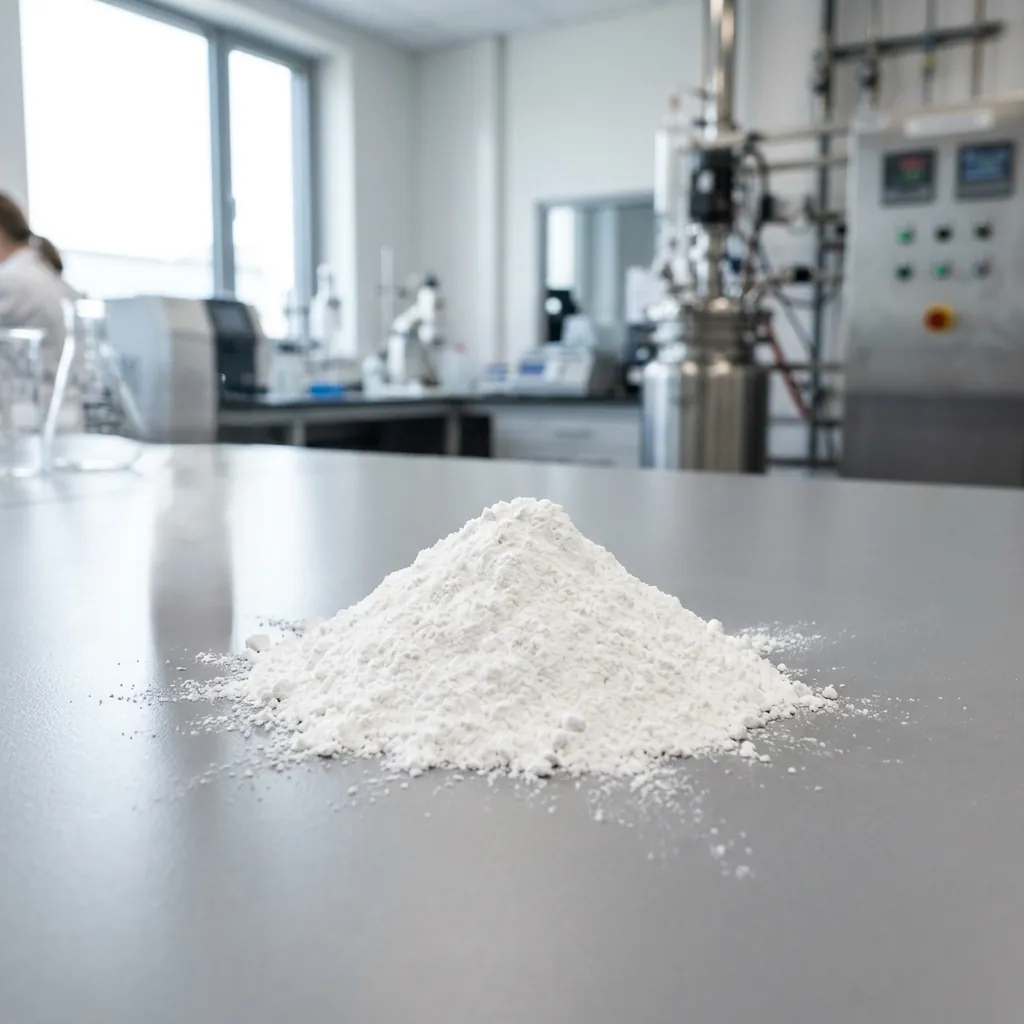
A rigidity and stability enhancer in processes ranging from plastics to paper and paint. Sustainable GCC formulations extending from limestone basins to the marvel of industrial micronization.
Micronized d50
1.5-45 Micrometers
Purity Value
Above 95%
ISO Brightness
≥ 90%
Surface Area
5-24 m²/g
Natural calcium carbonate (CaCO₃): It is the main mineral component of rocks such as limestone, marble and chalk. In industry it is referred to as GCC (Ground Calcium Carbonate) and, unlike synthetic productions, it is obtained entirely from natural quarries by mechanical grinding.
It is formed into very fine and flawless particles in ball and Raymond mills, in dry or agitated wet grinding (d50: between 1.5 - 45 micrometers). Thanks to the stearic acid bath applied in coated product models, the product gains a much more durable polymer and hydrophobic matrix capability.
With its low production costs, it is the indisputable volume filler of global plastic, polycarbon, PVC cable and industrial paper formulations.
PCC VS GCC COMPARISON
The values in the table provide the reference ranges of our standard quality assurance in the inorganic products market.
| Parameter | Observed Value / Type | Production Standard Essence |
|---|---|---|
| Production Method | Mechanical grinding (GCC) vs Chemical precipitation (PCC) | Physical reduction |
| Particle Shape | Irregular, angular (GCC) | From natural calcite |
| Average d50 | 2 - 10 µm (GCC) | Micronized market values |
| Specific Surface Area | 5 - 24 m²/g (GCC) | Wide contact surface |
| Cost | Low / Economical (GCC) | High savings compared to PCC |
| Main Component | Calcium Carbonate (CaCO₃) | Limestone and marble |
Natural calcium carbonate (GCC) is a product obtained from limestone by mechanical grinding and used as a filler in many sectors, such as plastics, paper, paints and construction materials. Its quality depends on the purity of the raw material and on the grinding and classification conditions. This section summarises what to look at when choosing the product.
| Feature | GCC (natural) | PCC (precipitated) |
|---|---|---|
| Production | Mechanical grinding of limestone or marble | Chemical reaction of milk of lime with carbon dioxide |
| Particle structure | Irregular | More controlled in shape and size |
| Raw material | Natural limestone | Hydrated lime and carbon dioxide |
Either type may be preferred depending on the application; which one is suitable depends on the formulation and the process conditions.
The limestone is first broken in crushers, then reduced in fineness by dry grinding and separated by classifiers into the required particle size distribution. The purity of the raw material directly affects the final quality. At Vişne Madencilik's Çukurova / Gündoğan (Ceyhan, Adana) quarry, the CaCO₃ content of the limestone is above 97% according to the company's statement, and a crushing and screening plant operates on the same site.
| Parameter | What it shows | Why it matters |
|---|---|---|
| CaCO₃ purity | The calcium carbonate content of the product | Determines the effectiveness and the colour of the filler |
| Brightness (ISO) | The brightness of the product | Important for appearance in paper, paint and plastics applications |
| Particle size distribution (d50, d97) | Median and top particle size | Affects surface quality, flowability and opacity |
| Moisture | The free water content of the product | High moisture leads to caking and handling problems |
The required values vary by application; clarifying the parameters and the analysis method before ordering is important for consistent quality from batch to batch. The quality and documents required for food (E170) or pharmaceutical use must be confirmed separately.
Calcium carbonate is the starting point of the lime cycle: when it is calcined at roughly 900–1100 °C, it gives quicklime (CaO), and when that is slaked with water, hydrated lime (Ca(OH)₂). We describe this chain in detail in our article on what hydrated lime is; for the products, see the quicklime and hydrated lime pages. For more detail, see the difference between quicklime and hydrated lime.
Vişne Madencilik has produced lime and limestone products since 1952; the company states that it exports to more than 30 countries. By sharing your particle size and quality expectations for the product type, you can request information and a quotation from our team. For the plants, see our factories page.
The most popular sectors that provide flexibility, colorability, opacity and physical stabilization while reducing operating costs.
Used as a filler in PVC, polypropylene (PP) and polyethylene (PE) formulations, it adds rigidity and durability.
Most Common FillerServing as a filler and coating pigment in printing and writing papers, it increases the brightness and opacity of the paper.
Alkaline TechnologyUsed as an extender in paint formulations thanks to its low oil absorption capacity and binder savings.
Binder OptimizationIt is the fundamental industrial raw material as a fine aggregate in ready-mixed concrete, as a filler in asphalt mixes and in clinker production.
Core Load-Bearing FillerIt plays a role in the neutralization of acidic soil, as calcium support for bone development in animal feed, and as an anti-caking agent.
High BioavailabilityThe quality declarations and values most frequently heard by our industry partners regarding our calcium products offered for sale.
At our Çukurova / Gündoğan quarry, the CaCO₃ content of the limestone is above 97% according to the company; values such as brightness are stated in the product's certificate of analysis.
Precise granulometry at d50 values chosen for the application, used in ball mills, air separators and wet grinding.
Depending on the size of the limestone extracted from our quarries, optimized routing is carried out towards GCC, slag or lime kilns.
Optional stearic acid coated production is carried out in order to achieve a superior polymer matrix and hydrophobic behavior.
Depending on the application, TS EN 197-1 (cement), TS EN 12620 (concrete aggregates) and ISO 3262 (fillers) are used as references; ask our team and refer to the certificate of analysis for conformity information.
The body of information we have compiled regarding ore micronization processes related to product formulations.
Supply of stearic-coated or pure calcium carbonate for your project with a high brightness index and unique d50 micronization.